AI Answer Inclusion Rate
- Before
- 18%
- After
- 52%
- Impact
- +34 pts ↑
GEO + AI search
Prior work from Cata Bohórquez’s personal portfolio. Results are reported in the original case study.
The results
The brief
As AI assistants become a primary entry point for product discovery, ACUVUE faced a critical visibility gap. When testing real user queries like “best contact lenses for screen time” and “contacts for dry eyes all day”, competitors were consistently surfaced first, despite ACUVUE’s strong product innovation. This exposed a key issue: ACUVUE product pages were optimized for traditional SEO, but not for how AI systems interpret, prioritize, and retrieve information.
To improve ACUVUE’s share of voice in AI-driven discovery by optimizing product pages for generative search, enabling the brand to capture non-branded, problem-based queries and drive measurable growth in engagement and trial conversion.
The thinking
If we redesign ACUVUE product pages using Generative Engine Optimization principles, aligning content with real user language, structuring it for AI retrieval, and embedding it within UX components, then AI assistants will prioritize ACUVUE as a source, increasing visibility and influencing early-stage decisions.
What we did
We translated technical features into human, intent-driven benefits so pages align with how users naturally search and how AI systems respond.
We restructured pages to directly match high-intent queries with clear, scannable answer blocks instead of burying information.
We introduced question-based headings, stronger hierarchy, and shorter meaningful blocks that AI systems can reliably extract.
Content was connected to educational sections, FAQ-style answers, and guided next steps to improve both clarity and conversion.
We captured broad, non-branded intent around dry eyes, screen fatigue, and long wear discomfort before users searched for a specific brand.
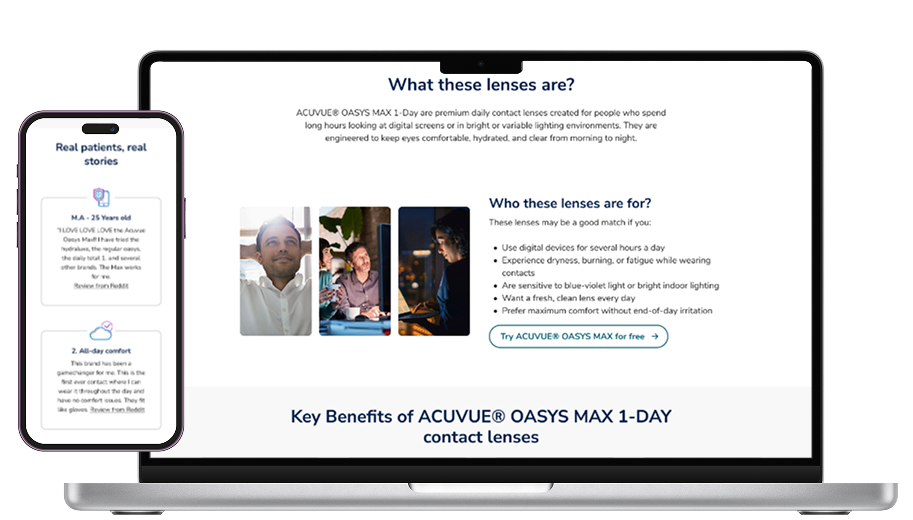
We re-structured the content into semantic, answer-ready blocks and rewrote paragraphs in plain language so AI can summarize them accurately.
We added “who it’s for,” “how it works,” and “benefits” sections aligned with common AI query intent and transformed marketing claims into informational descriptions that LLMs can trust.
This makes the page far more likely to be referenced when users ask
We start every engagement with a free site audit. No pitch, no fluff — just the truth about what your site is costing you.